A hygge garden – create the cosiest living room for autumn and winter
How does your garden pavilion become the cosiest spot in your home for autumn and winter?
As the days grow shorter and the air takes on a crisp chill, we instinctively seek warmth, peace and comfort. This is when the Danish art of happiness – hygge – really comes into its own. It’s a philosophy of celebrating small, everyday pleasures, creating a cosy atmosphere and finding joy in simplicity. What if the perfect place to practise hygge were in the heart of your own garden rather than in your living room?
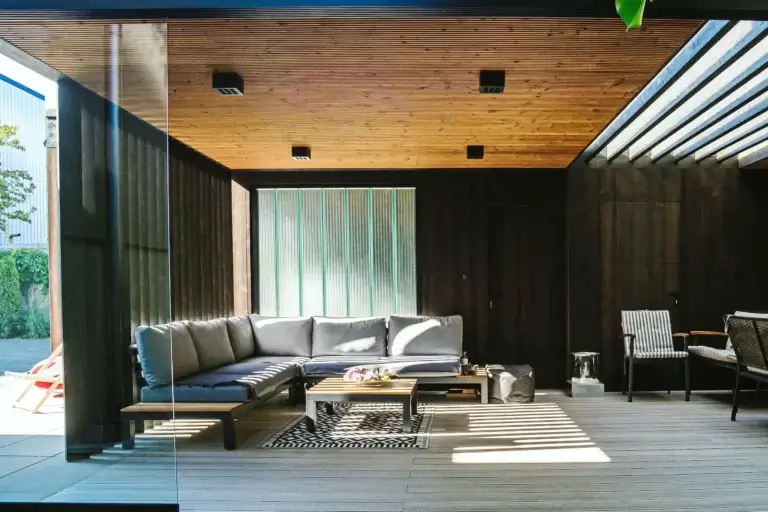
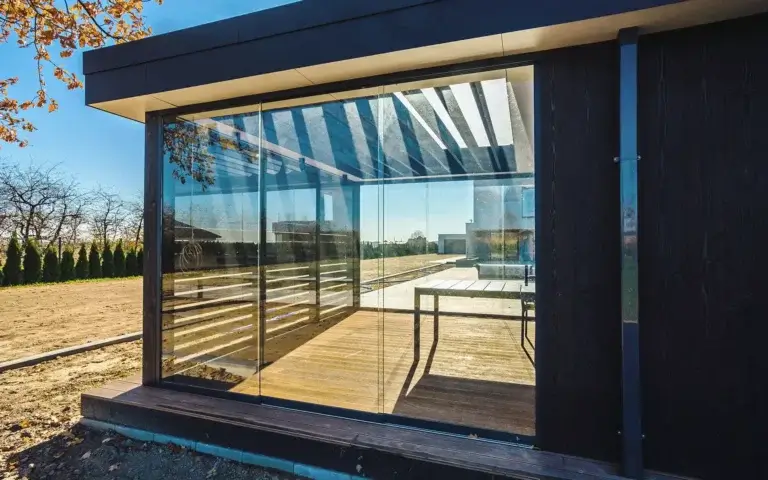
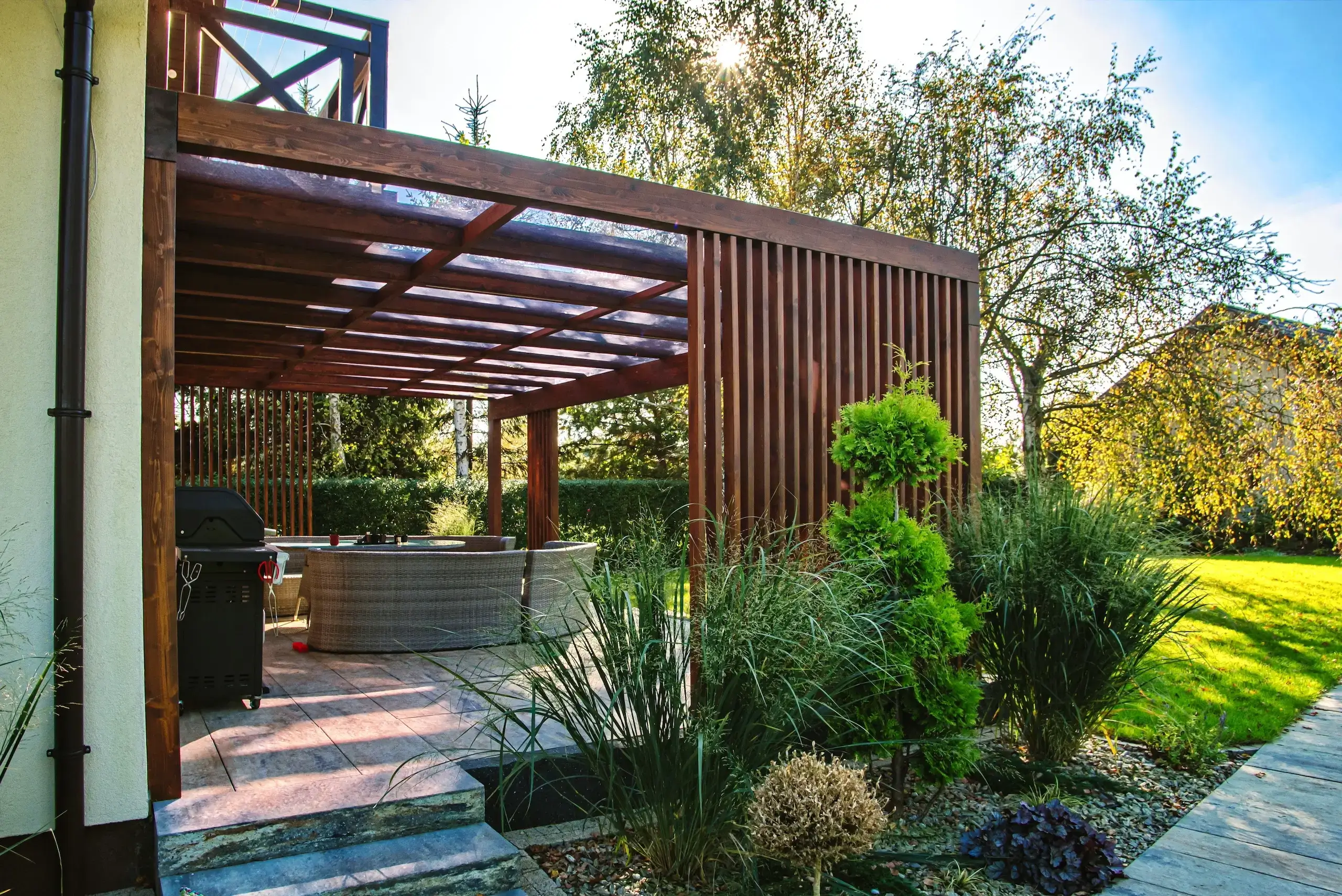
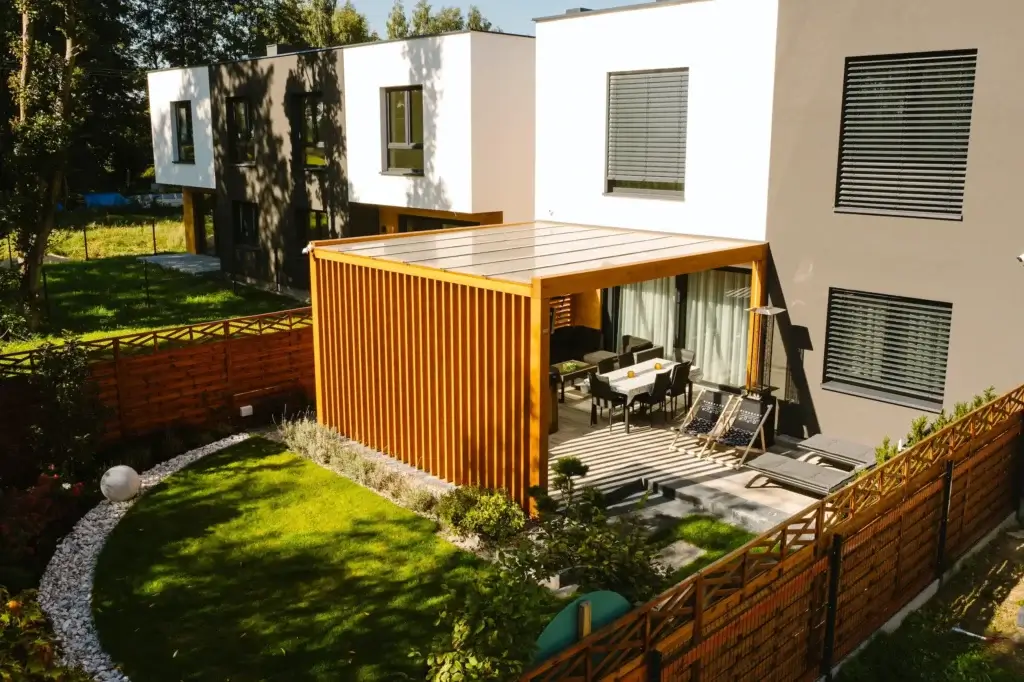
A hygge-style garden starts with a sense of shelter. Decoration comes later. We are most inclined to linger where we have shelter behind us, a roof overhead and an open space in front from which we can see what is happening around us. That is why we design the seating area in a garden pavilion with the backs of the seats towards the side screening and the open view of the garden in front. The sides can be screened with vertical open slat panels, horizontal louvres or a living wall. Where the view is to be preserved, we use sliding glazing or a ZIP screen blind with guide rails. Open slats filter light and views, giving shelter without a feeling of enclosure, while sliding glazing and a ZIP screen blind close off the side exactly when needed. The arrangement of sheltered and open sides determines whether the garden pavilion feels cosy in autumn and winter as well as providing cover.
What defines the Scandinavian hygge style?
First and foremost, it’s worth remembering that hygge is more than an interior design style. It’s a whole philosophy of life. Although it’s often associated with pale wood and minimalism, its meaning runs much deeper.
Hygge is the Danish art of cultivating happiness, rooted in savouring the moment and feeling safe and comfortable. It’s about seeking inner balance and finding joy in simple pleasures – the glow of candles, the warmth of a fireplace, the taste of hot chocolate or unhurried time spent with loved ones, free from distractions. It’s about consciously creating an atmosphere of intimacy, gratitude and calm in which we can simply be ourselves.
How do you create a hygge garden?
Let go of the idea that a garden pavilion is only for summer. A modern, year-round structure of wood and glass is an architectural canvas that turns into the most magical, cosiest room in the whole house in autumn and winter – your own private garden living room, a sanctuary of comfort and calm. Your pavilion will be the starting point for creating a garden in the spirit of hygge.
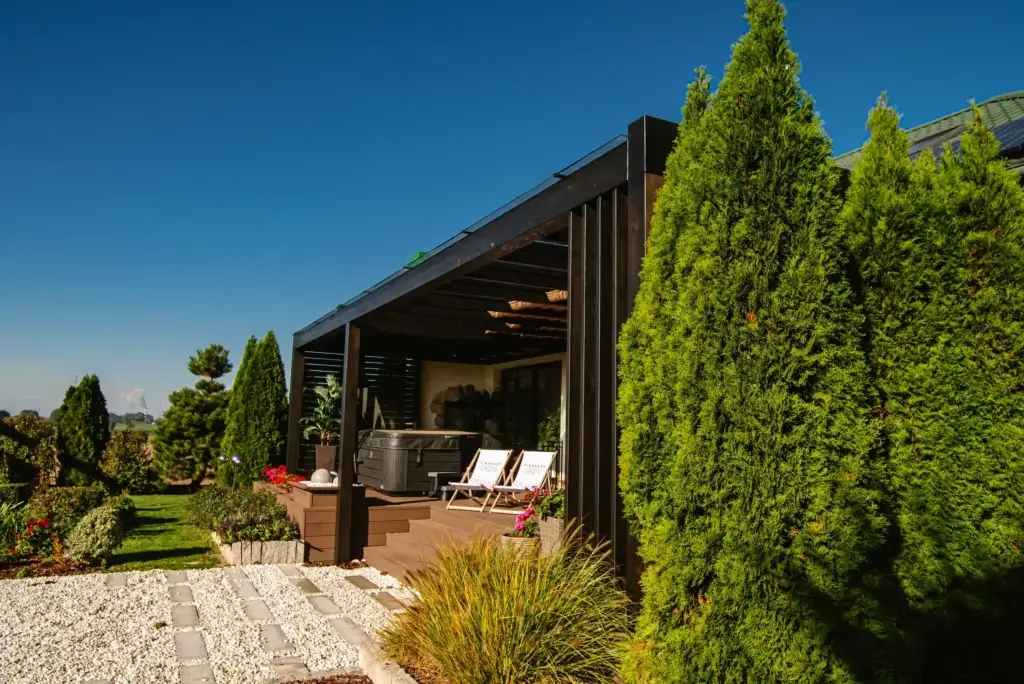
Step 1 – The magic of subtle lighting
Lighting is the foundation of a hygge atmosphere. Swap a single bright light for several smaller lights dotted around the room, each casting a soft, warm glow.
- Lamps and wall lights – Place floor and table lamps with fabric shades in the corners for gentle, atmospheric lighting.
- Fairy lights – Delicate, warm-toned fairy lights strung beneath the ceiling or wound around the structural beams will give the impression of a starry sky.
- Candles and lanterns – The very essence of hygge. Whether the candles are in glass lanterns or on elegant candlesticks, their flickering flames bring the warmth of a real flame and a soothing glow to the room.

Step 2 – Wrap up in soft fabrics
Nothing makes a room feel cosy quite like layers of fabric that feel soft and pleasant to the touch. They make the room a place where you want to settle down and rest.
- Throws and blankets – Drape thick woollen throws, cashmere blankets or soft knitted blankets over sofas and armchairs. Let them hang loosely, inviting you to wrap up on a chilly evening.
- Cushions – Plenty of cushions in different sizes and textures (velvet, wool, faux fur) will turn any sofa into a haven of comfort.
- Rugs – A soft rug on a wooden floor, perhaps a sheepskin or a rug with a chunky weave, will instantly make the space look warmer and make walking barefoot a pleasure.
In a garden pavilion that is not heated like an indoor room, how cosy textiles feel depends on how they behave in cool, damp air. Wool absorbs moisture into the fibres themselves, away from the surface, so a wool throw and a thick wool rug provide warmth even when they become damp. Cotton loses much of its insulating ability when damp and takes a long time to dry, so cotton cushion covers and blankets feel cold to the touch after a damp night. A roof protects textiles from rain, but moisture in the air still reaches them. Throws and cushions left in the pavilion all winter fare best if they are made of wool, while cotton needs to be dried indoors. A timber board floor provides a stable, ventilated base for a rug because it does not trap moisture underneath in the way an impervious floor covering does.
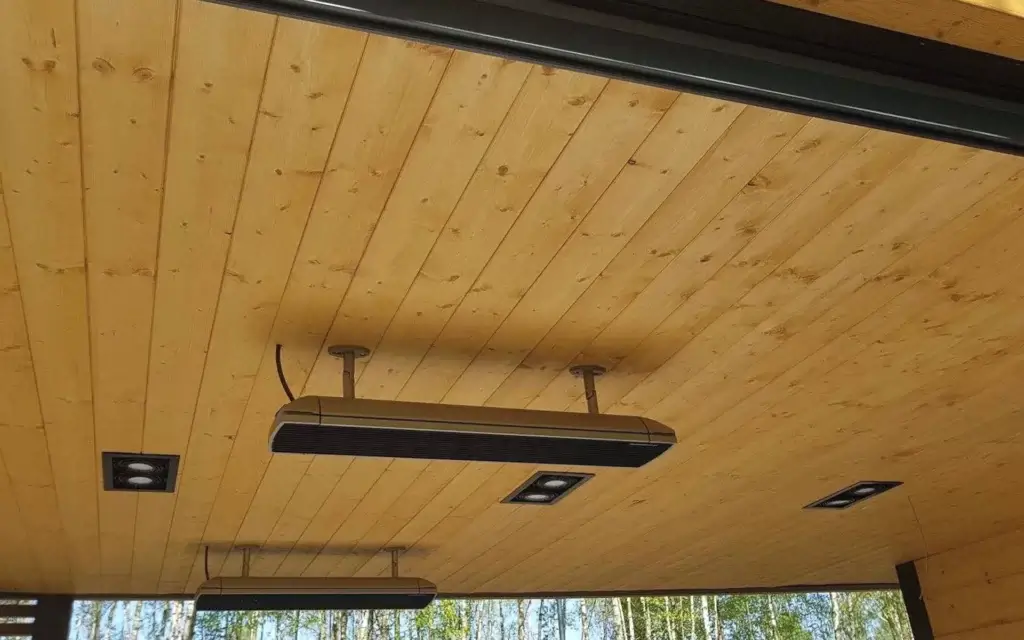
Step 3 – The power of unobtrusive heating
Feeling comfortably warm is essential. Modern technology lets you enjoy a gentle warmth that’s perfectly in keeping with the philosophy of hygge.
- Infrared heaters – These elegant, unobtrusive heaters warm people and objects directly rather than heating the air. The sensation is much like the warmth of the sun’s rays.
- Bioethanol fireplace – A fireplace is the heart of a cosy room. Real, dancing flames, with no smoke and no need to install a chimney, are the very essence of hygge. The fire draws the household together, creating the ideal setting for conversation and relaxation.
Step 4 – The taste and aroma of comfort
Hygge also appeals to our senses of taste and smell. Your garden living room is the ideal place to savour your autumn and winter rituals.
- Hot drinks – Imagine a mug of thick hot chocolate with cinnamon, fragrant mulled wine with cloves and orange, or ginger tea. It’s worth setting up a little corner in your garden pavilion with a coffee machine or kettle.
- Scent – Alongside the aroma of your drinks, scented candles (perhaps with notes of sandalwood, vanilla or baked apple) or essential oil diffusers will help set the mood.
Sound is part of the hygge atmosphere too, and a timber garden pavilion with a large area of glazing sounds different from an indoor room. Glass and oiled boards reflect sound, so conversation around the table can be louder and less distinct. Textiles and a wool rug absorb mainly high frequencies, which are important for speech intelligibility, so even a few cushions and a rug shorten reverberation time. The gaps between vertical slats and horizontal louvres scatter sound without absorbing it, softening reflections without making the interior quieter. How clearly you hear the rain depends on the roofing overhead. Raindrops are clearly audible on glass and polycarbonate and less so on a solid roof laid over timber decking.
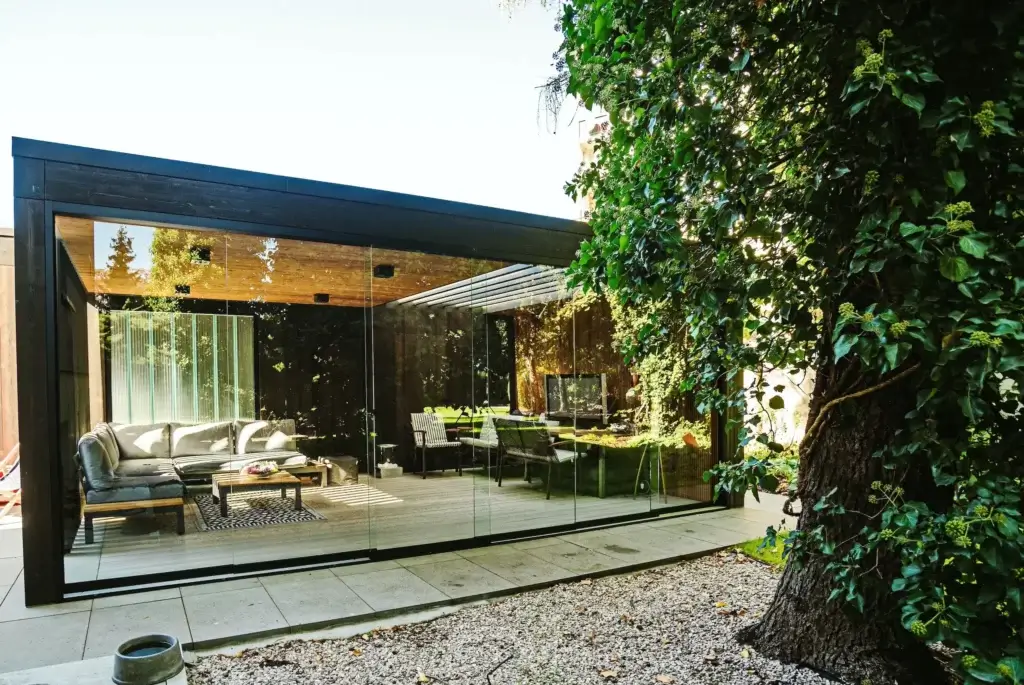
A cosy garden pavilion in the spirit of hygge – the philosophy of happiness
Your garden pavilion is much more than a building. It’s a space that lives by the rhythm of the seasons. Now, in autumn and winter, its true magic shows – it becomes a personal sanctuary where time slows down and simple pleasures take on a deeper meaning.
Would you like to create a space like this in your garden, but need to build a pavilion first? Get in touch with us. We’ll design and build it for you.
Looking for more inspiration? Find us on Facebook or Instagram.