Can wooden garden pergolas withstand all weather conditions?
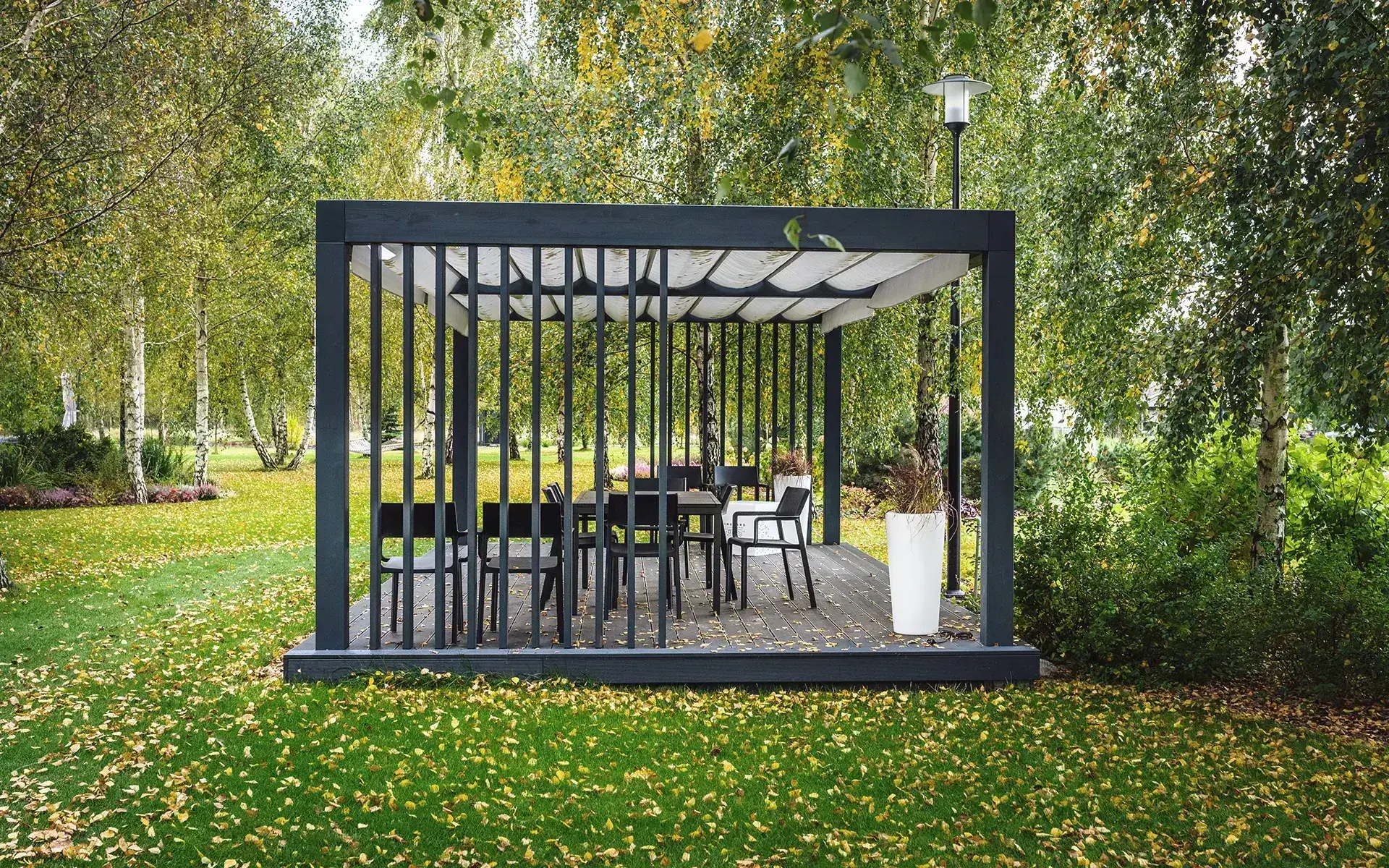
Wooden pergolas are among the most beautiful and practical structures you can have in a garden. They can provide cover for a patio or add a decorative touch to the garden, while also creating a quiet corner where you can relax outdoors. But how well does a wooden pergola really stand up to rain, wind and hot days? Let’s look at how it holds up in different weather conditions and when it’s worth choosing one.
A timber pergola withstands rain, frost and sun when water can drain off the wood, the posts are kept out of damp conditions and a pigmented finish protects the surface. The end grain of a beam absorbs water fastest. The wood fibres act like tiny channels, drawing water deep into the timber. A post resting in damp soil or on a wet slab is similarly at risk and can rot from the base up. The beam ends are therefore protected before assembly, while the end grain is still accessible. Each post is fixed to an anchor instead of being buried in the ground. Our pergola posts have concealed anchors with no visible steel. The full-section glulam (BSH) beams run in one piece along their length, leaving no intermediate joint where water could collect.
Contents
The wooden garden pergola – a classic with lasting appeal
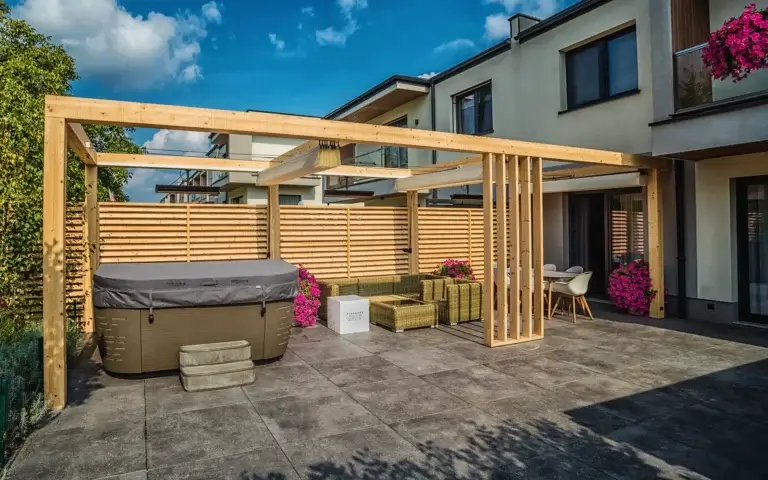
A wooden pergola is more than just a garden ornament. It’s a structure that combines function and beauty. Wooden garden pergolas look at home alongside greenery and garden trellises, and complement the exterior of your house, whether you prefer a rustic or a more modern style.
They make a lovely backdrop for climbing plants such as ivy, honeysuckle or romantic roses. Over time, these plants can grow along separate wires or trellises set away from the timber beams, forming a natural canopy that provides shade on hot days. It’s an ideal choice for anyone who dreams of a peaceful place to rest and unwind surrounded by nature.
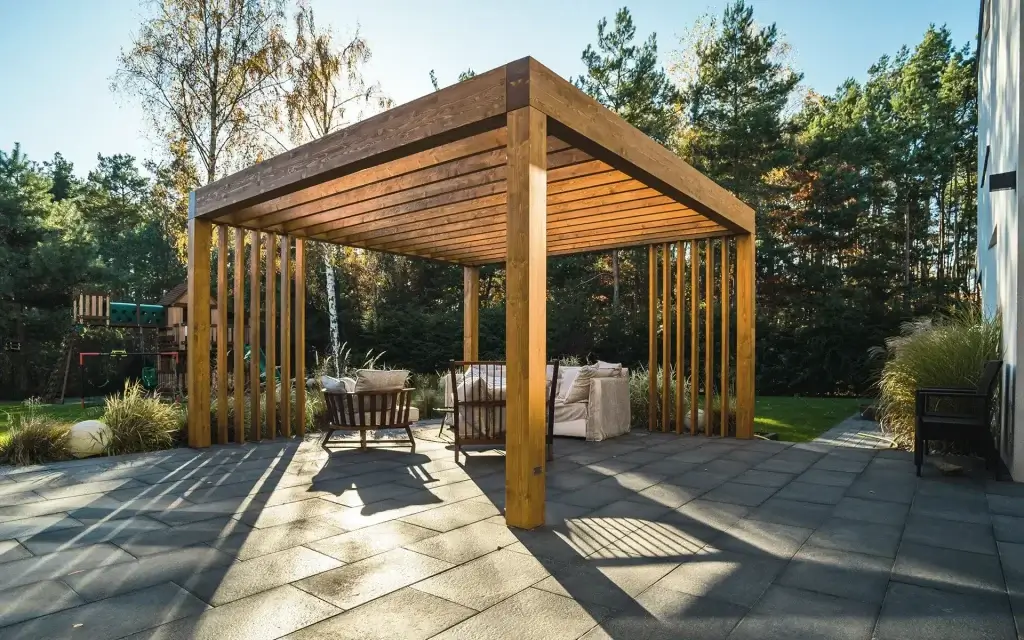
Are wooden pergolas weather-resistant?
The answer is yes – under certain conditions. Wood is a durable natural material, but it needs the right protection to stay both functional and attractive for years to come.
What can damage a wooden pergola?
- Moisture and rain can cause the wood to rot if it hasn’t been properly treated with a wood preservative.
- Strong sunlight – UV radiation affects the colour of the wood, which can fade and lose its appeal over time.
- Frost and fluctuating temperatures cause tiny cracks and shorten the life of an untreated structure.
- Wind – if the pergola hasn’t been securely installed, stronger gusts can damage it.
How can you help a wooden pergola last and withstand the weather?
A wooden pergola can serve its purpose for many years, whatever the weather, if you prepare it properly. Here’s what you can do:
- Wood treatment is the key to weather resistance. Painting or oiling the wood regularly protects it from moisture. Pigmented finishes slow the greying caused by UV radiation. Clear products do not prevent this colour change.
- Secure installation – a pergola, especially a freestanding one, must be permanently anchored to the ground, for example with steel anchors and fixing plugs.
- Roofing – more and more garden pergolas are fitted with polycarbonate roofs, shade fabric or louvred roof systems. These give the pergola a modern look and provide shade. A continuous roof covering, such as polycarbonate, or louvres that form a watertight roof when closed also protect against rain.
- Climbing plants add a decorative touch and provide natural shade. Give them a separate support, as stems growing against the timber trap moisture.
The pigment in the finish affects how quickly the timber loses its colour. UV radiation damages the surface layer, turning an unprotected beam grey. A clear finish generally offers no protection against greying because it contains no pigment to absorb UV light. A darker shade contains more pigment than a light one and therefore provides more protection. The colour you choose affects how often you will need to renew the finish. Fine cracks along the grain, by contrast, can appear with any colour as the wood moves with changes in humidity. We choose the colour of the structure from the Osmo and Remmers ranges of oils and wood stains, or have a shade mixed. When the finish needs refreshing depends on the product applied and the condition of the timber.
Should you choose a wooden patio pergola or a freestanding one?
A wall-mounted patio pergola is a great choice if you want to extend your living space outdoors. The house gives it some shelter, providing extra protection from wind and rain.
A freestanding garden pergola, on the other hand, suits any space. You can put it anywhere in the garden – over a bench, over a set of outdoor seats or even as a frame for a swing.
Modern patio pergolas made of wood combine good looks with practicality, and you can add lighting, side screens or storage modules. A pergola makes an ideal decorative feature for the garden and serves many practical purposes.
It is through the roof covering, rather than the timber itself, that wind and snow load the pergola. Wind passes through an open framework. A glass roof, a blind or side ZIP screens running in guide rails present surfaces that catch the wind, which presses against them and can pull them away from the posts. A solid roof also collects snow, so the beams carry more weight than on an open pergola. On a freestanding pergola, all these forces pass through the posts into the foundations. On a wall-mounted pergola, the house wall to which the beams are anchored takes some of the load. The anchors, beam sections and foundations are therefore sized for the chosen covering and location. Pinegard offers detailed construction drawings and a foundation design for each structure, using either a concrete slab or pad footings. The graphite-grey pergola on a small patio beside a grey brick house is an example of a wall-mounted pergola with a solid roof. Beams anchored into the walls support the toughened glass roof.
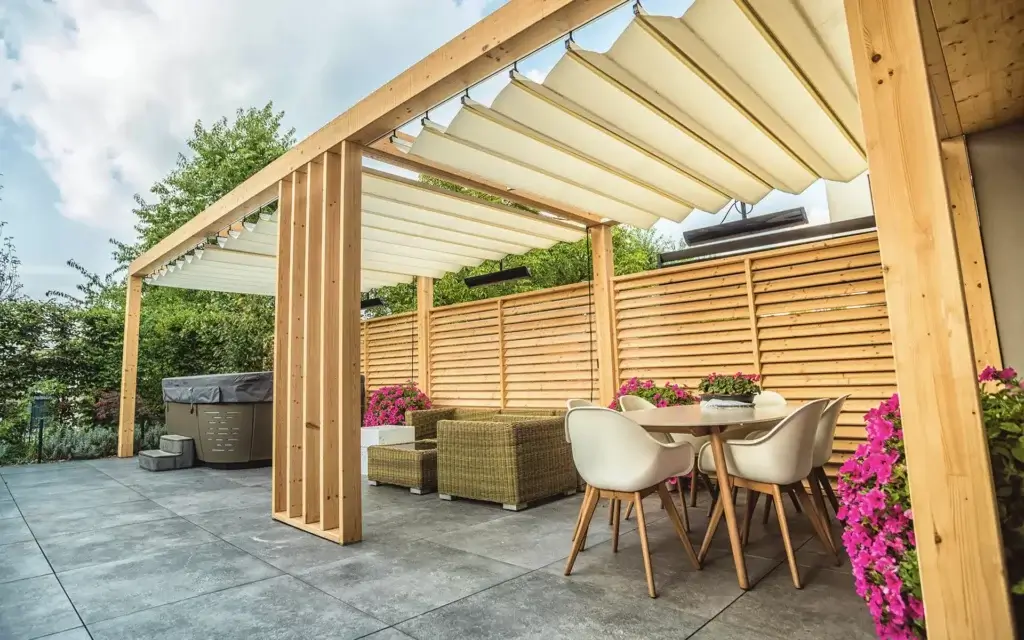
Summary – how well a wooden garden pergola stands up to the weather
A wooden pergola, for all its natural beauty, needs the right protection to withstand changing weather conditions. With regular maintenance, secure installation and the option of adding a roof, wooden garden pergolas can last for years and stand up to the weather, making them both practical and decorative features on a patio or in a garden.
It’s an ideal choice for anyone who enjoys relaxing outdoors and wants to create a cosy corner of their own that’s a pleasure to spend time in all year round, even in the rain or on hot days. After all, a well-designed wooden pergola is more than just a structure – it sets the mood and gives your garden an atmosphere all its own.